Concept & Project Description
Until recently, Ethiopia was ravaged by a cruel civil war with over 500,000 dead. Among the victims are an alarming number of child soldiers. In South Sudan, 4.5 million people are homeless due to the ongoing conflict. The majority of women and children remain in poor refugee camps in peripheral regions and neighboring countries. The effects of climate change, floods and droughts, the Corona pandemic and the lack of food supplies due to the war in Ukraine have once again severely affected the people in the region. A humanitarian catastrophe of unimaginable proportions is looming.
We are speechless in the face of this horror. The suffering of countless people is taking place without the general public in Switzerland taking any notice of it. In fade-outs and racist-disparaging views continues a global history of exploitation of people, nature and raw materials.
Lack of institutions, precarious political conditions and 'failed states', however, are not an expression and do not allow any statement about the nature or character of the people concerned. Rather, a fatal spiral of violence, traumatization and oppression is taking place.
In this vortex, even political representations and cultural-political institutions have only a very limited effect. In Addis Ababa, the Swiss embassy has to protect itself behind walls and NATO barbed wire. It seems all the more important to dedicate the artistic intervention directly to the people in the region. The art in the building is understood as cultural and real participation in the construction of a building, which as an institution, as a presence in the form of the Swiss embassy and representation on site, can also be substantially transported as meaning and charisma. The Swiss Embassy will radiate innovation, modernity and cosmopolitanism as an architectural and functional sign that embodies the values of Switzerland and its foreign policy.
The hope that Western values and structures can be directly transferred to other countries proves to be deceptive. Freedoms as well as specific emancipation movements are not directly realizable in eroding social structures and disintegrating states. "White men saving brown women from brown men" did not lead to liberation, but rather to an increasing division of society and at the same time to the subalternization of the women directly affected, as Gayatri Chakravorty Spivak pointed out. Women's bodies became the site of the conflict between local patriarchal cultural traditions and the (neo)colonial interventions. Currently, this fatal situation can be observed through a failing LGBTIQ movement in Ethiopia. They are infiltrated and controlled by the West, church and conservative social forces say. Human rights and minority rights are denounced as a neoliberal and neocolonial effort of foreign actors and are seen as the opposite of regional traditions, religions and nations.
We have to critically question the implications of our Swiss perspective, our views and our own actions, which are also guided by values, and we have to direct our interventions not to project our own ideas and not to promote one-sided instruction and social division. Therefore, there is a special responsibility to support courageous socio-political and cultural initiatives. In the past decade, many people - aided by digital communication options - have dared to resist rigid power regimes, as is currently the case in Iran.
Based on these concrete experiences, we have started an evaluation of their needs together with the people in the region. We started a dialogue with different artists and actors from the region and outlined our project together with them: the development of a collaborative network.
A network is being created to support minorities in terms of their cultural presence and self-organization. The co-operation of the regional communities in the network, leads to a superordinate, collaborative structure.
The network consists of individual nodes. Cultural entities operate such nodes as local community centers. In the community centers, events, discussions and lectures will take place, which serve both self-organization and the creation of collective, socio-cultural projects. A culture of commons, of communal, non-profit and grassroots democratic projects will be developed.
The regional nodes are connected in an overarching network, a collaboratively organized structure. The nodes collectively evaluate how the specific work on site, the learning processes and a self-organization can be implemented. Beyond the exchange between the participants, the network also serves as a public platform for the concrete presentation of projects and as a stimulus for broad, public discussion and reflection. It can be understood as a model of how a productive networking of specific minorities and marginalized cultures can be initiated.
The project is developed in work cycles in which local and transregional exchange is crucial. Within the collective learning and design process, the input and support of specialists and experts is desired - gladly also from the FDFA.
The Network and five Nodes
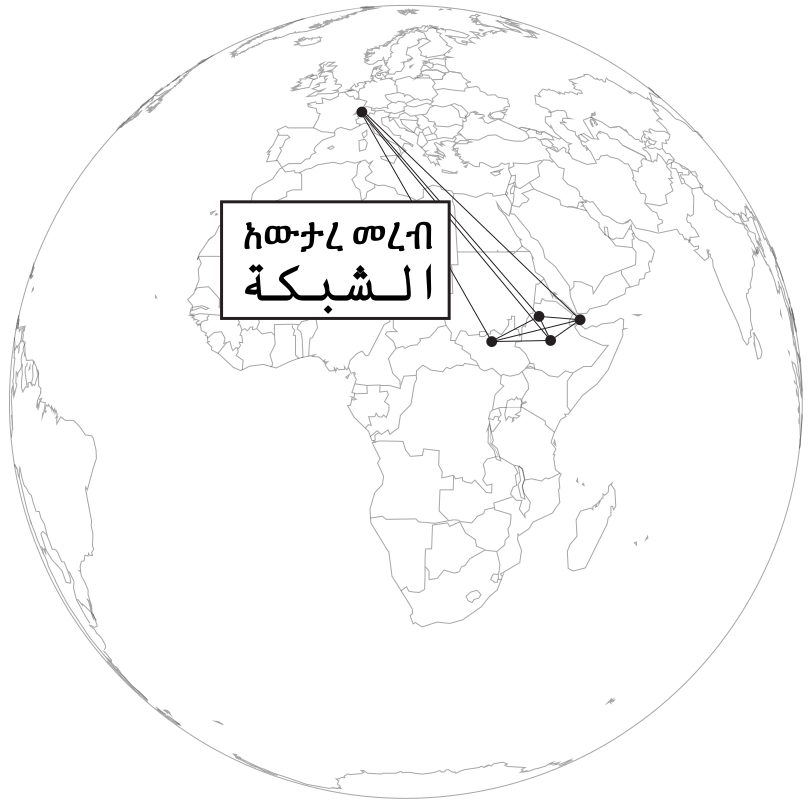
The goal of the network is an empowerment, a self-organization and collaboration with similar actors as well as a forum and a platform of self-expression and exchange - socio-cultural, but also technical and organizational. In the individual nodes, issues of health, FLINTA emancipation, LGBTIQ emerge. Many participants struggle with consequences of violence, traumatization, oppression and exploitation. Addressing these issues produces new and culturally specific solutions. Therewith, an act of solidarity and violence reduction can succeed in the learning of marginalized ethnic minorities. And a reference of historical figures and traditions of non-heteronormative ways of life is opposed to a rhetoric of rejection. A multi-layered approach is to be realized with local options for action, as well as the network's own internal structures and a platform with public events and publications.
In the first workshops we were able to outline the following nodes with the respective groups:
هاكر سبيس Hackerspace – Djibouti
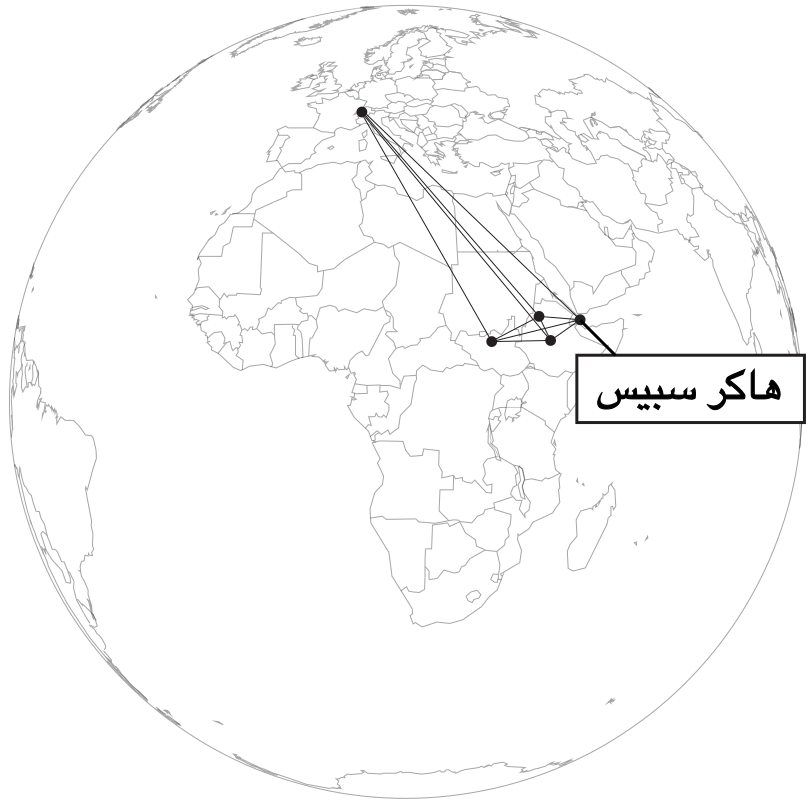
Djibouti, one of the smallest African states, is a hub for world trade. Tens of thousands of Somalis, Ethiopians, Eritreans use Djibouti as their point of departure to cross the 27 kilometer wide strait to the Arabian Peninsula. Since the start of the war in Yemen, the escape routes have been crossing, and people traumatized by war and violence are increasingly stranded in the growing slums around the port city. Digital communication is elementary to maintain existential connections, but at the same time it is a gateway to surveillance and censorship. A hackerspace aims to strengthen socio-cultural perspectives, resilience and agency.
ዜጋ Zega – Addis Abeba

Zega means citizen, but behind it is more than just a code word for LGBTQI. It is about escaping subalternization and stigmatization. Issues of gender, sexuality and diversity challenge hierarchical power structures and traditional patterns of behavior. At the same time, taboos such as FGM, HIV/AIDS, sexualized violence and gender norms are addressed, and therefore require very specific approaches, the justification of own and culture-specific narratives, in order to find acceptance and recognition.
مساحة آمنة Safer Space – South Sudan Border Region
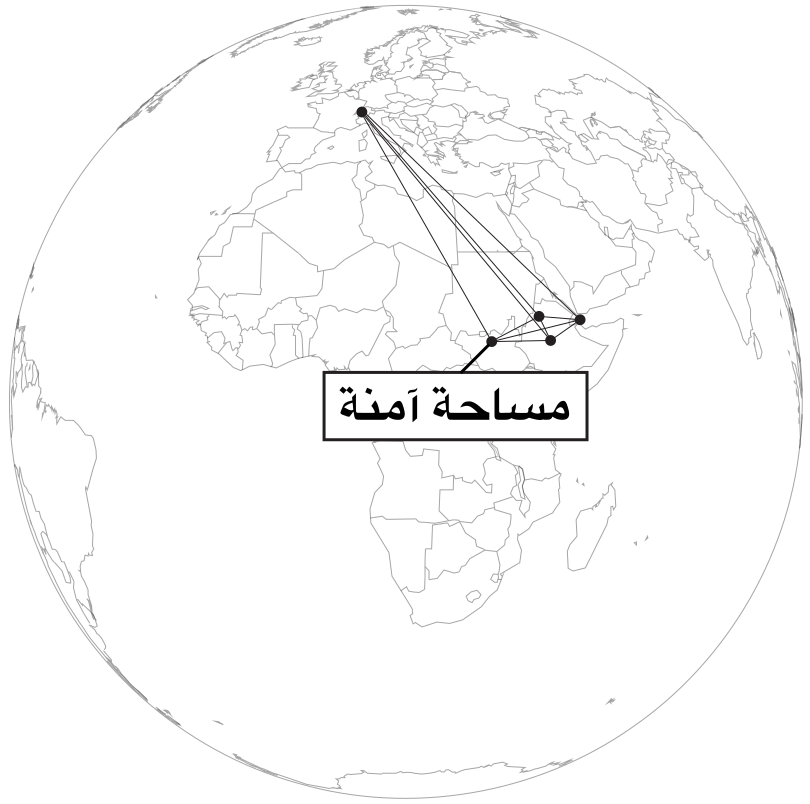
The security situation in South Sudan is fragile and marked by outbreaks of violence and the effects of the advancing climate crisis. Millions of women and children are confined to refugee camps in marginalized areas and neighboring countries, and their livelihoods are precarious and increasingly threatened. Children have experienced massive trauma as child soldiers and through systematic, sexualized violence. There is an immense need for support, hearing, education and perspective.
حجرة مشتركة
የማህበረሰብ ቦታ
Community Space – Switzerland
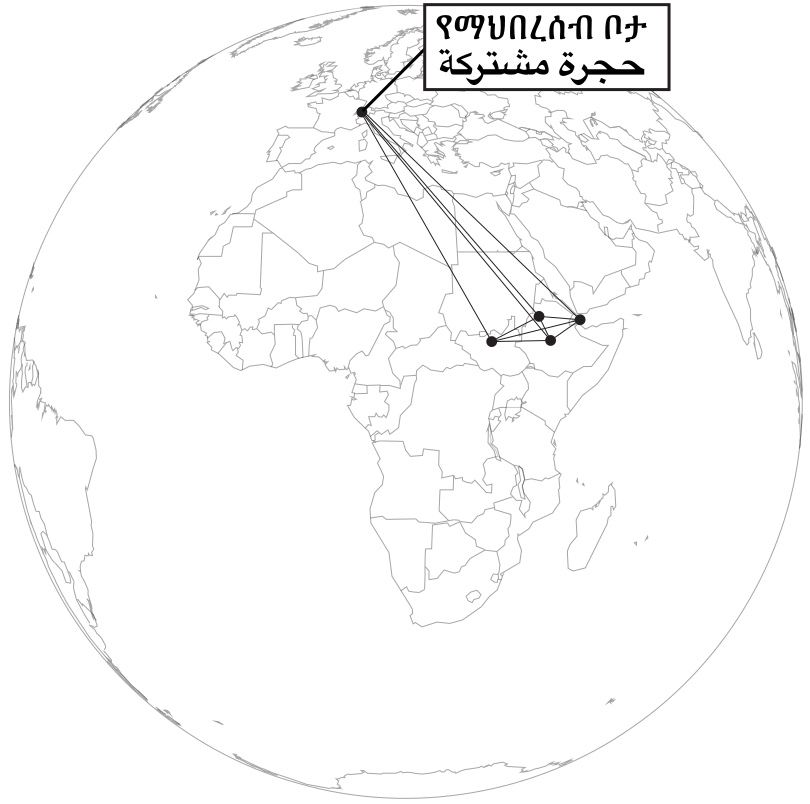
Many refugees and asylum seekers came from the war and crisis region to Switzerland. The majority, is looking for ways to contribute to conflict resolution and democratization in the region. Round tables, discussions and possibilities regarding trauma management, Truth and Reconciliation and perspectives of participation and democratization are emerging with them.
ማኦ Mao – Gumuz / Amhara Region
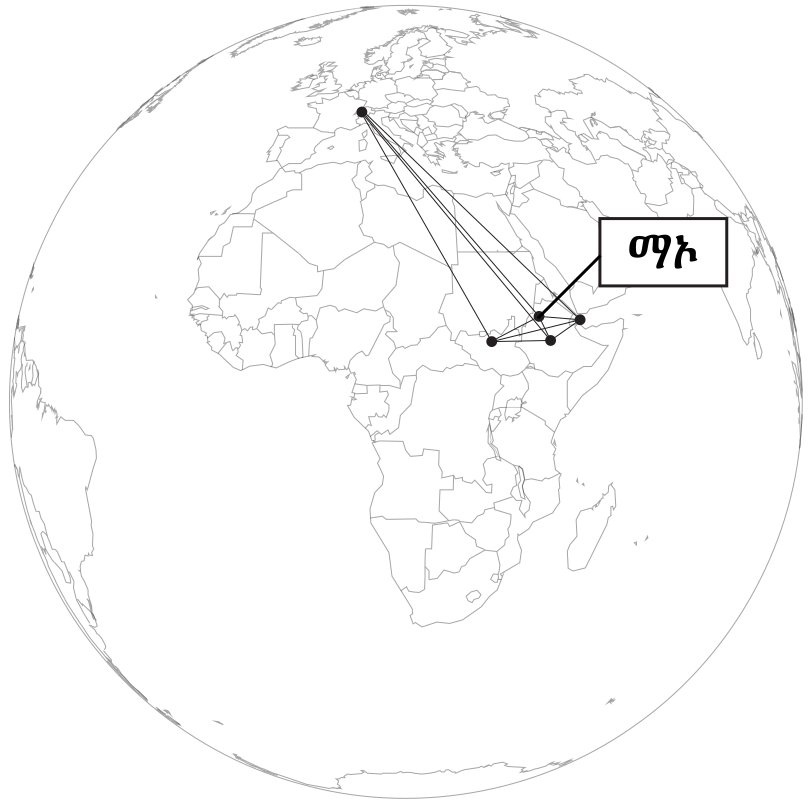
Mao became the term under which the Oromo grouped various indigenous groups. The groups have cultural traditions and a political organization in which gender and generational equality and participation are essential aspects of coexistence. As a result, the groups also purposefully resisted subjugation through land theft or enslavement over long periods of time. Today's minorities are concerned about the preservation of their culture and language, but especially about a peaceful continued existence in times of violent conflicts and climate crisis.
A link to the public platform can be placed on the building and in the rooms of the Swiss embassy, e.g. in the form of the QR code. Presentations, videos, documentations and debates from the network can be presented in the embassy.
Presentations and impulses arise that are of lasting significance and public effectiveness beyond all those directly involved, beyond the time frame and the spatial sphere.